
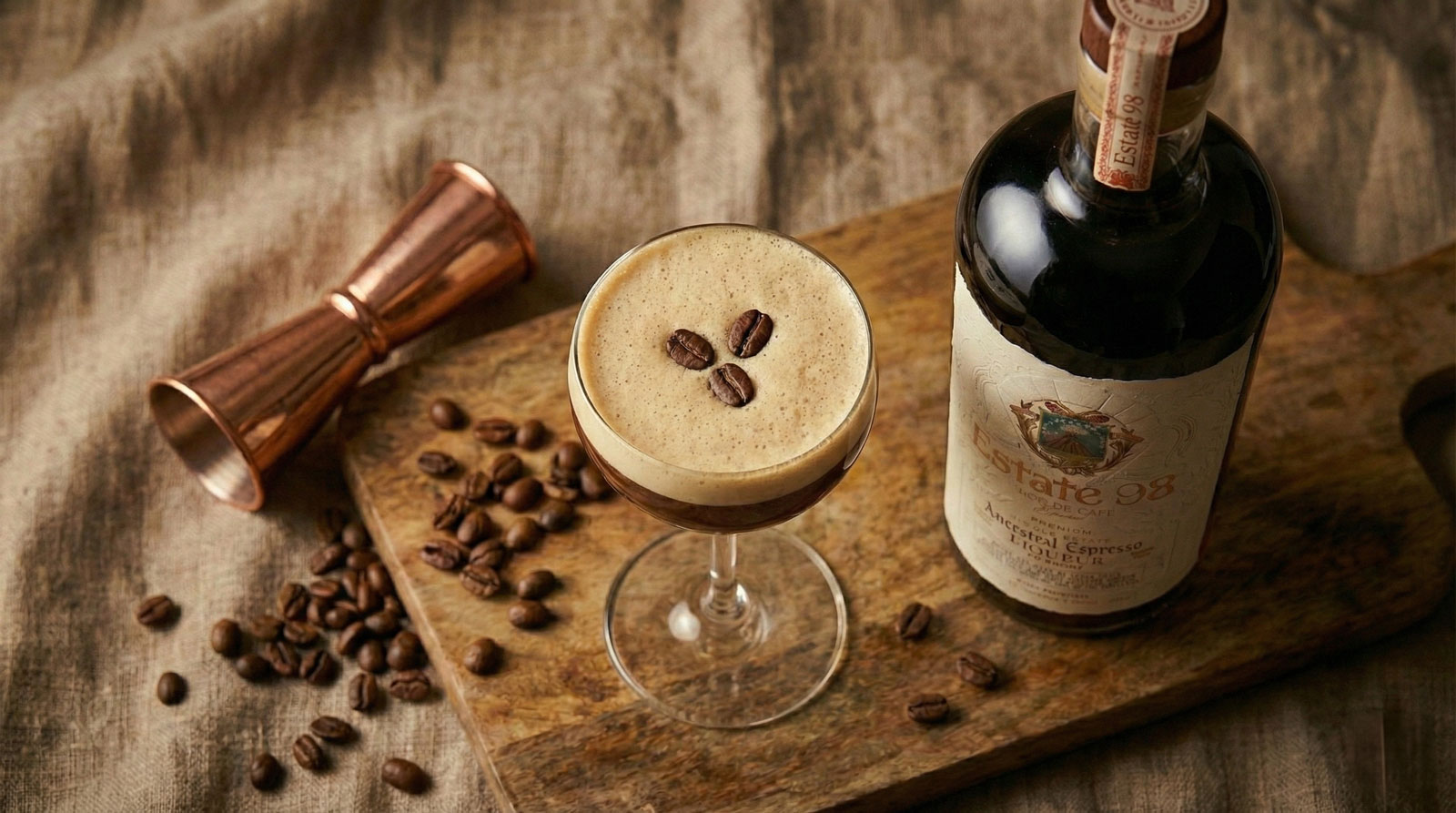
In the world of spirits, few categories are evolving as fast as coffee-based alcohol. While “coffee liqueur” has been a back-bar staple for decades, 2026 marks the definitive rise of a more sophisticated, intense, and versatile sibling: Espresso Liqueur.
Whether you are a home mixologist or a professional bartender, understanding the difference between a sugary syrup and a true espresso spirit is the key to mastering the modern cocktail.
At a Glance: The State of Espresso Liqueur
- Trend: Shift from sugary coffee syrups to “dry,” coffee-forward spirits.
- Utility: High quality espresso liqueurs act as a “liquid espresso shot,”, eliminating the need for expensive or messy concentrates in cocktail prep.
- Health: Modern espresso liqueurs are low in sugar, that allow for a customizable cocktail experience
- Origin: Single-estate sourcing (like El Salvador) ensures premium quality and flavor consistency.
What Exactly Is Espresso Liqueur?
Espresso liqueur is a spirit crafted by combining high-quality alcohol with concentrated espresso or roasted coffee beans. Unlike traditional coffee liqueurs, which are often sugar-heavy and syrupy, espresso liqueur is designed to capture the aroma, depth, and bold character of a fresh-pulled shot of espresso.
Espresso Liqueur vs. Coffee Liqueur: The Critical Differences
Many people use these terms interchangeably, but for the discerning palate, the differences are night and day.
| Feature | Espresso Liqueur – Estate 98 | Traditional Coffee Liqueur |
|---|---|---|
| Coffee Profile | Intense, medium/dark-roasted, complex | Mild, sweet, “candy-like” |
| Sugar Level | Low (<1g per oz) | High (often 15–25g per oz) |
| Customizability | Total Control: The maker decides the sweetness level | Fixed: Often cloyingly sweet with no way to “undo” the sugar. |
| Function | Replaces espresso + liqueur | Requires added espresso for balance |
| Texture | Spirit-forward and smooth | Thick, syrupy, and heavy |
Why the Category is Exploding in 2026
The shift toward espresso liqueur is driven by three major consumer movements:
1. The “Better-for-You” Shift
Consumers are moving away from “sugar bombs.” By choosing spirits that are low in sugar, drinkers can enjoy a more sophisticated profile without the sugar crash associated with legacy brands. Because premium espresso liqueurs contain lower amounts of sugar, they act as a blank canvas — allowing the bartender to precisely control the amount and type of sugar added to the final drink, or to skip the sweetness entirely for a bold, dry finish.
2. The Espresso Martini Renaissance
The Espresso Martini is officially a global classic. However, because most people don’t have an espresso machine at home, the industry has pivoted toward “liquid espresso” spirits. A true espresso liqueur provides that signature “crema” and coffee punch without the need for expensive equipment or messy prep.
3. The Rise of the Carajillo
This Latin American staple—espresso shaken with Licor 43—has migrated north. Using a high-quality espresso liqueur streamlines this recipe, making it more accessible for home bartenders while keeping the flavor profile premium and coffee-forward.
From Seed to Bottle: How It’s Made
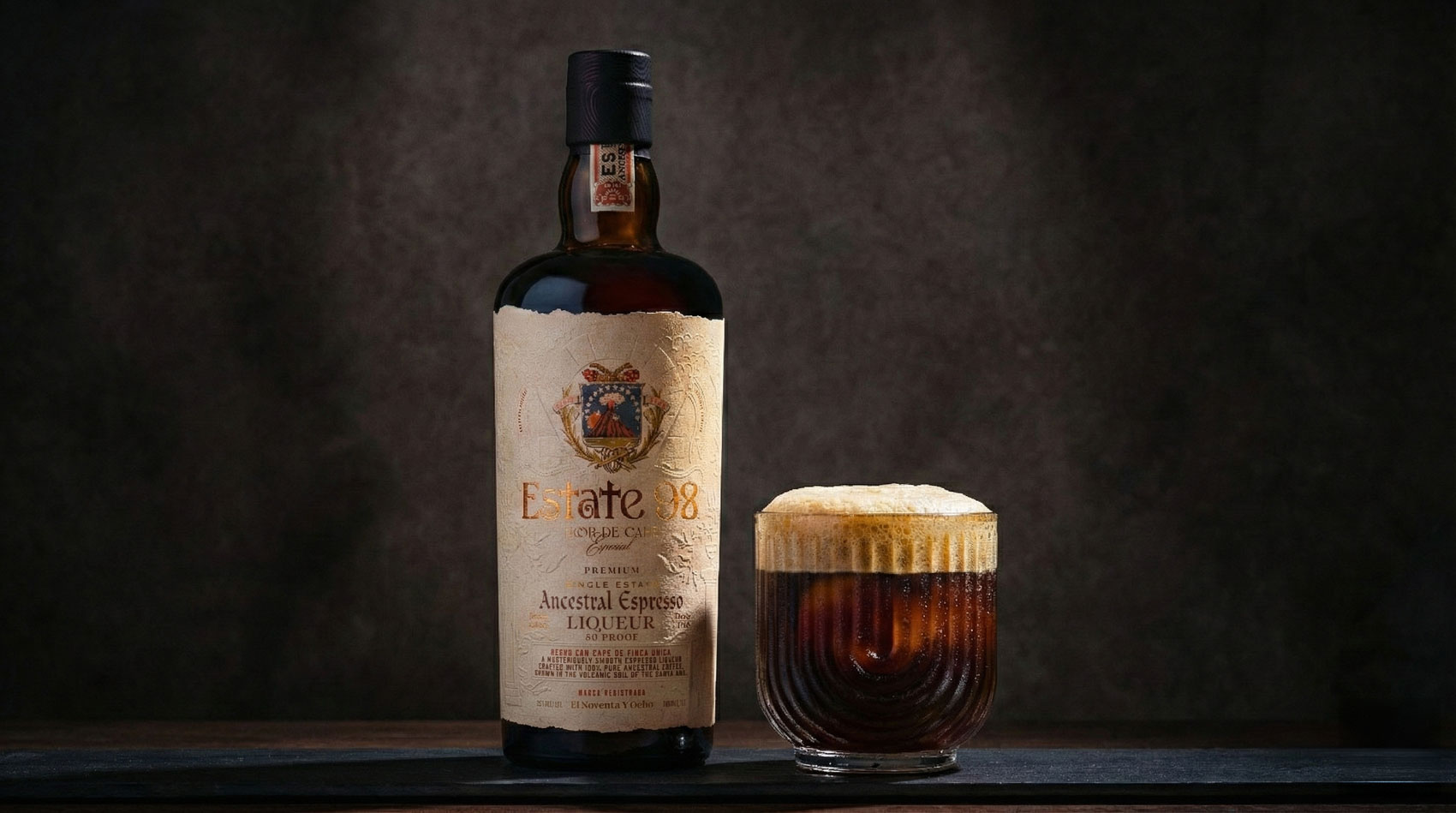
Not all liqueurs are created equal. The quality of an espresso liqueur depends entirely on its origin. At Estate 98, our process is a “Seed-to-Bottle” journey:
- The Sourcing: We use single-estate Arabica beans from the high-altitude volcanic soil of El Salvador.
- The Extraction: Rather than using artificial flavorings, the spirits are infused with real coffee to pull out natural notes of dark chocolate and toasted nuts.
- The Balance: We keep the sugar content minimal, ensuring the liqueur acts as a “utility spirit” that complements vodka, tequila, or whiskey.
How to Use Espresso Liqueur Like a Pro
The beauty of a premium espresso liqueur is its simplicity. Because it is so coffee-forward, you can cut your ingredient list in half.
- The Two Step Espresso Martini: Combine 2 oz Estate 98,1 oz Spirit (Vodka or Tequila) and 0.25 oz of Honey. Dry shake to incorporate honey. Add ice, shake hard for 15 seconds and strain into a chilled glass. No brewing required.
- The Espresso Spritz: Mix Estate 98 with blood orange soda and a splash of Prosecco for a bright, effervescent afternoon drink.
- The Volcanito™: Shake Estate 98 alone on ice and strain into an espresso cup for a bold, “spirit-espresso” moment.
FAQ: Common Questions About Espresso Liqueur
Does espresso liqueur have caffeine?
Yes. Since it is made with real coffee extraction, it naturally contains caffeine.
Can I drink espresso liqueur neat?
Absolutely. A high-quality, low-sugar version like Estate 98 is excellent over a large ice cube as a digestif. Check out out our Volcanito recipe.
Why is Estate 98 considered “Low Sugar”?
Most coffee liqueurs on the market are classified as “liqueurs” because of their high sugar content. Estate 98 breaks the mold by offering less than 1 gram of sugar per serving, focusing on the flavor of the Salvadoran Arabica bean instead.
Ready to simplify your home bar?
Shop Estate 98 Espresso Liqueur and discover why the future of coffee cocktails is low-sugar and coffee-forward.
